

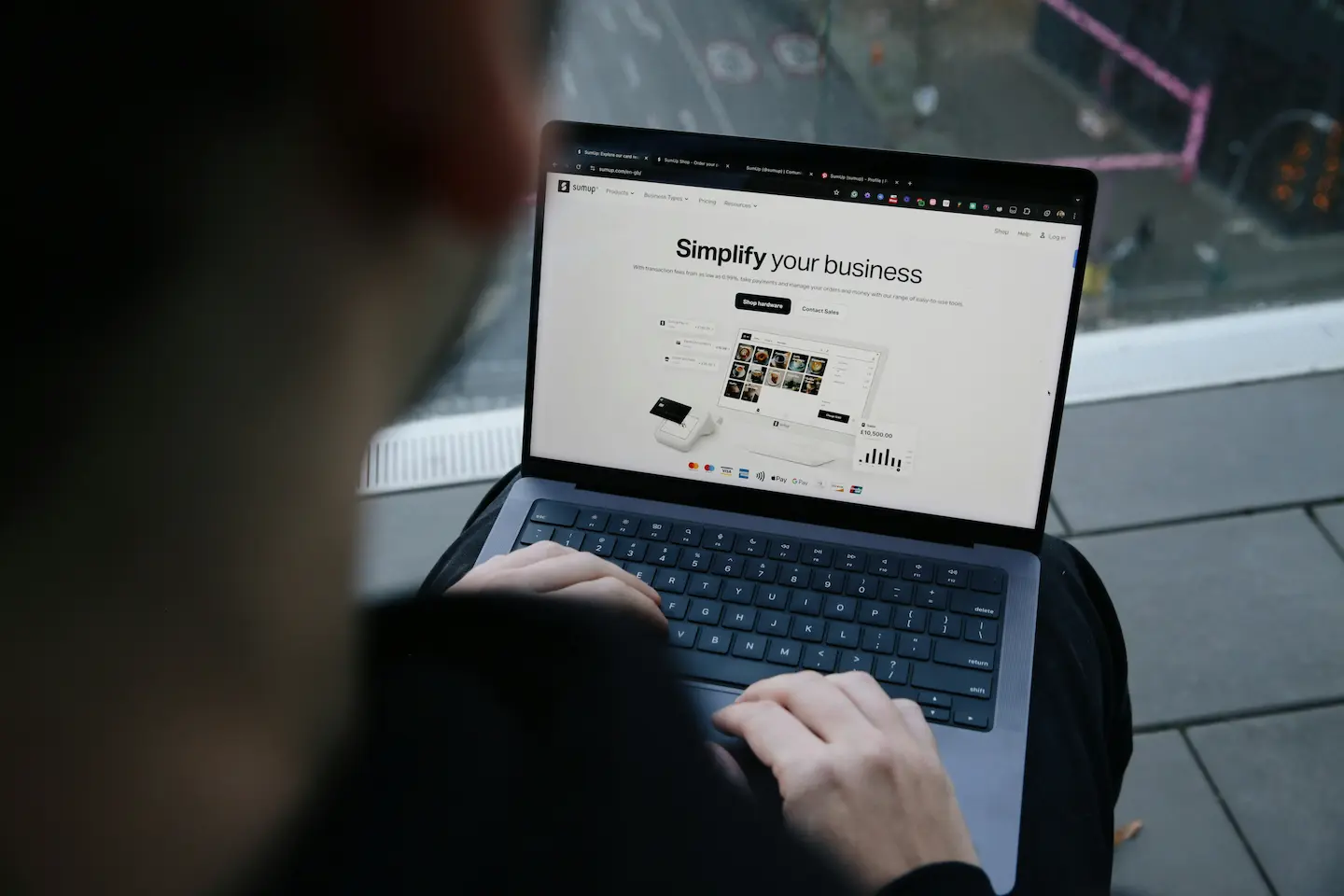

Not every business needs an advanced web application. But many companies order a “new website” when what they actually need is a digital tool that manages leads, customers, cases, bookings, or internal workflows. The difference affects the budget, technology choices, and how the project should be planned. Here, we walk through when a standard business website is enough, when a customer portal is the right next step, and when you should think in terms of a web application from the start.
Start with the problem, not the technology
Web development for businesses often becomes unnecessarily confusing when the discussion starts in the wrong place. “Should we build this in WordPress, Laravel, Next.js, or something else?” is rarely the first question. A better question is: what should the solution do for the business?
A business website should primarily explain, persuade, and generate contact. A customer portal should give customers or partners access to information and features behind a login. A web application should solve a more active workflow, often with roles, data, integrations, and logic that changes over time.
That is also why the same word can mean different things to different suppliers. A “website with features” can, in practice, be a simple form. But it can also be the beginning of a business system. The earlier you set the right level, the easier it becomes to receive a quote that can actually be compared.
Scenario 1: You need visibility and trust
If the goal is to be found, present your company, and showcase your services, a standard website is often enough. This is especially true for consultancies, local service companies, industrial companies, accounting firms, and other businesses where the buying journey begins with the customer searching, comparing, and getting in touch.
A good business website does not need to be technically complicated. It needs to be clear. Visitors should quickly understand what you do, who you help, why you are credible, and what the next step is.
Here, the focus is often on structure, copy, design, SEO, load time, and mobile optimization. A CMS is important so that you can update text, publish news, and adjust content yourself without needing developer support for every small change.
For this type of project, a solution like ScriptSector’s work with web development and websites for businesses is a good fit. The focus is on a modern website that acts as a digital salesperson, with technical SEO, responsive design, and a clear path to conversion.
Scenario 2: You need to collect leads and drive sales
The next level is when the website is not only there to inform, but to actively contribute to sales. In that case, an attractive homepage and a contact form at the bottom are rarely enough.
Here, web development often needs to be more closely connected to the sales process. This may include landing pages for different target groups, forms with smart routing, CRM integration, downloadable guides, booking flows, quote requests, or automated email sequences after someone submits an inquiry.
This is still often a business website, not a full web application. But it requires more thought around conversion and data. Who should receive the lead? What happens after the form is submitted? Should the customer be tagged in a CRM? Should the sales team receive an email? Should the customer get an automatic reply with the right information?
A good rule of thumb is that a lead-generating website should reduce friction between interest and contact. Visitors should not have to search for the next step. At the same time, your internal team should avoid manual duplicate work.
At this stage, customer cases become especially valuable. By looking at ScriptSector’s references, you can see the difference between straightforward websites, e-commerce solutions, apps, and more advanced system projects. This helps you, as the buyer, find the right level of ambition.
Scenario 3: Customers or staff need to log in
When users need to log in, the project often starts to move toward a customer portal or web application. It may still be described as “a website,” but technically it is something else.
A customer portal can, for example, allow customers to view order status, download documents, create support cases, track invoices, book appointments, or manage their profile. For staff, the equivalent solution may be an internal tool for administration, work orders, inventory, reporting, or project workflows.
Here, questions around permissions, security, data models, and integrations become central. Who can see what? Which parts should the customer be able to update themselves? Does the solution need to connect to an ERP system, CRM, accounting system, BankID, Stripe, Fortnox, or other services?
This is often where many projects are ordered incorrectly. You ask for a website, receive a quote for a website, and later discover that the most important part is actually the system logic behind it. The result is add-ons, delays, and technical compromises.
If login, user roles, and business-critical workflows are central from the start, you should look at system development and SaaS applications rather than website production alone.
How to know which level your business needs
A simple way to choose the right level is to look at what the user should be able to do, not just what the page should display.
- Choose a business website if the goal is to present the company, build trust, and generate contact inquiries.
- Choose a lead-focused website if the website should drive campaigns, segment target groups, and connect to the sales process.
- Choose a customer portal if customers, partners, or members should log in and manage information themselves.
- Choose a web application if the solution should be an active work tool with data, roles, integrations, and business logic.
The boundaries are not always sharply defined. A website can grow into a portal. A portal can develop into a larger web application. The important thing is to choose a technical foundation that does not block the next step.
The budget is driven by complexity, not number of pages
Many people think the cost of web development is mainly about the number of subpages. For a standard business website, that is partly true. More page templates, more content, and more languages affect the scope.
For a web application, it works differently. There, it is not the number of pages that drives the cost, but the rules behind them. A form can be simple. But if the form needs to create a case, send data to an external system, trigger notifications, handle files, and show different statuses to different users, it becomes a system workflow.
That is why you should describe processes, not just views, when requesting a quote. Explain what happens before, during, and after the user does something. This makes it easier for the development team to assess scope, risks, and the right technology.
Think about maintenance from the start
A website can often be maintained through ongoing content work, security updates, and smaller improvements. A web application requires more active maintenance. It may need new features, logging, monitoring, staging environments, version control, and support when users run into problems.
That does not mean you should avoid web applications. On the contrary, the right solution can save many hours every month. But it should be seen as a digital product, not a one-off delivery.
This is where it becomes important to choose a partner that can both build and continue developing the solution. ScriptSector also offers hosting and maintenance for apps, websites, and digital solutions, which is especially relevant when the solution becomes business-critical.
From website to business value with ScriptSector
The right web development for businesses is not about choosing the most advanced solution. It is about choosing the solution that matches the goal. Sometimes that is a fast, clear, and SEO-optimized business website. Sometimes it is a lead engine. Sometimes it is a customer portal or web application that streamlines the entire business.
At ScriptSector, we help companies define that boundary before the project starts. We can build websites, customer portals, web applications, and custom systems - but above all, we help you choose the right level for your specific needs.
Want to discuss whether your business needs a website, customer portal, or web application? Contact ScriptSector here, and we will help you make the next step concrete.