

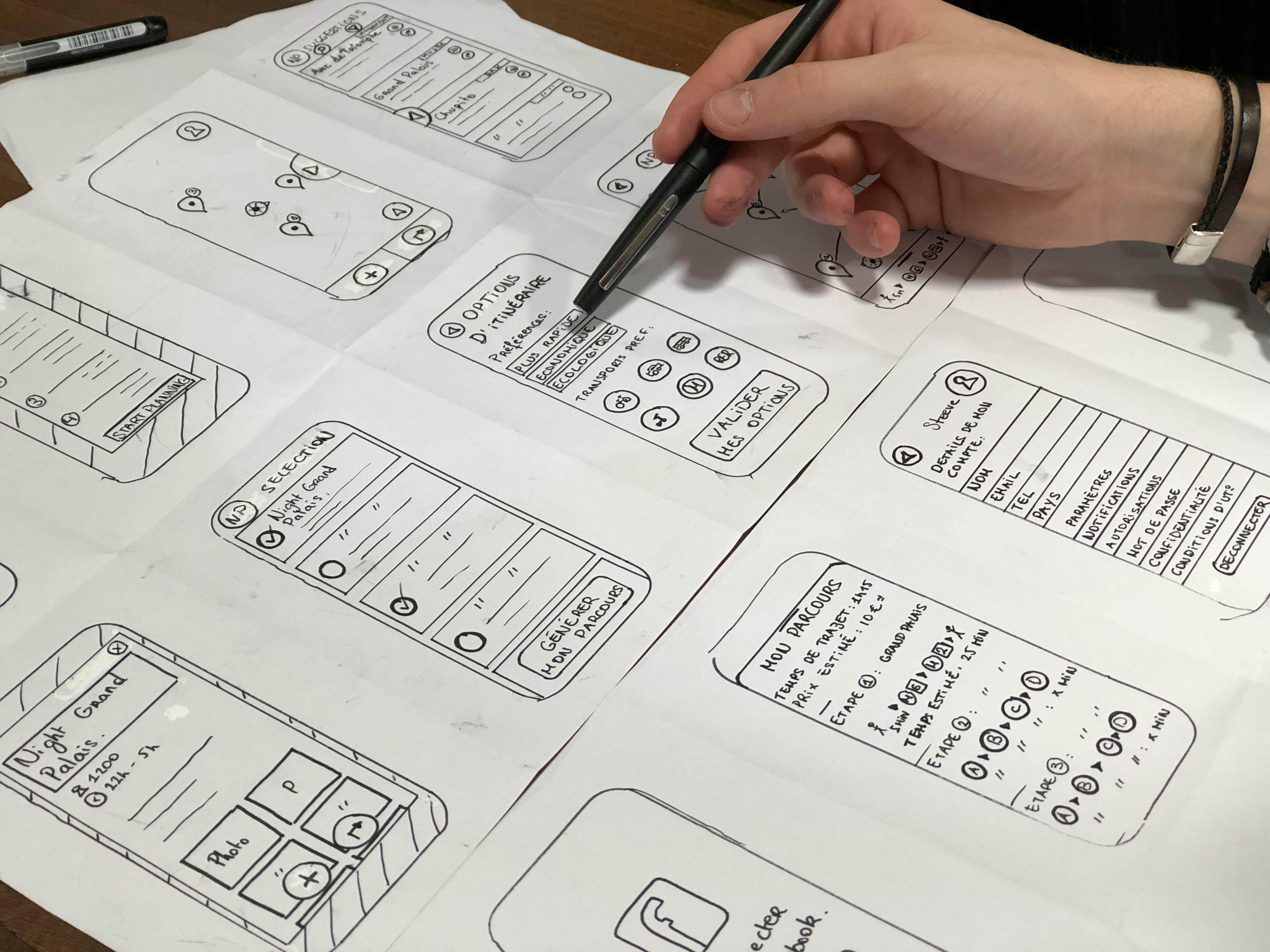

For SEK 60,000 excluding VAT, ScriptSector's MVP Sprint gives you a working first version of your app in six weeks. It includes scope prioritisation, design, backend, API and source code. Development focuses on the core user flows that solve the main problem, usually for either web or mobile. You get more than a clickable prototype. Additional features, third-party service fees and a public app store launch should not be treated as automatically included.
This guide looks at the boundaries of the MVP Sprint: what you receive, what needs to wait and what happens after delivery. For a comparison of different types of app projects, see How much does it cost to develop an app?.
What do you get after six weeks?
You receive a working first version for web or mobile, with iOS and/or Android support as agreed in the scope if you choose mobile. It is ready to demonstrate, test with users and prepare for launch. Unlike a clickable prototype, the agreed flows work with the backend, data handling and APIs included in the project.
The useful measure is not the number of screens. It is whether someone can complete the task that makes your idea valuable. For a booking product, that might mean finding an available slot and making a booking. This is an example of a possible core flow, not a standard feature package included in every sprint.
| Area | Included in the sprint | Not automatically included |
|---|---|---|
| Features | Agreed core user flows | Your entire feature wishlist |
| Design and development | Design, backend and API for the agreed scope | Features outside that scope |
| Integrations | Necessary integrations that fit | Every integration and external fee |
| Platform | Usually web or mobile | Both web and mobile |
| Delivery | Working version and ownership of delivered materials | Public app store launch |
The aim is a coherent core flow rather than a collection of unfinished features. Deciding what to leave out is part of making that possible.
How is the scope agreed before work starts?
Before the sprint starts, the must-have features are prioritised. These are the features the app needs to solve its main problem. That agreed scope is the basis of the fixed price, not an open-ended list of ideas.
You can prepare for the discussion by answering three questions:
- Who will use the first version?
- What task must that person be able to complete?
- What can wait without removing the core value?
Describe actions rather than broad product categories. “The user can book an appointment” is more useful than “a complete booking system”. Even the first statement needs boundaries: which booking rules and pieces of information are essential for this version?
Your contribution includes business knowledge, an understanding of your audience and decisive feedback during the sprint. Development cannot replace your decisions about how the service should work for your customers.
Out-of-scope features go into the next phase. If a new idea comes up during development, it needs to be considered against the agreed boundaries. A fixed price does not mean new requests can automatically be added on top of the original commitment.
What usually does not fit into an MVP Sprint?
An MVP is rarely the place to build your entire future product. Several audiences with different workflows, extensive reporting, numerous edge cases and a long list of integrations may need to wait. The decision depends on your idea rather than a universal list of excluded features.
For example, a basic administrative view might be essential to support the core flow. A large administration system with many roles and reports is a different scope. The same feature label can hide very different amounts of work.
A sprint also usually focuses on one platform: mobile or web. Do not assume that a web app and a mobile app are both included. ScriptSector recommends the option that suits your idea and audience.
A useful distinction is between “the user cannot solve the problem without this” and “this would make the product more complete”. Both can describe valuable features. Only the first necessarily belongs in the initial version.
Are both design and development included?
Yes. Design and development are included, together with a backend and API adapted to the agreed scope. You are not just buying mockups that need a separate development project before anyone can use them.
The design needs to support the core task: what users need to understand, what information they must provide and how they move to the next step. The backend, data handling and API make that same flow work as a functioning product.
This does not mean every future screen or feature is designed and built during the sprint. If a feature is outside the scope, you should not assume its design is included either. For more context on the work behind the interface, read what an app developer does.
Can BankID, payments, booking or CRM integrations be included?
Yes, necessary integrations can be included if they fit the agreed scope. BankID, payments, booking and CRM are examples, not a bundle in which every integration is automatically included.
Start with the requirement. Does the user need BankID identification to complete the core task? Must payment happen inside the app? Which information actually needs to reach the CRM? Those answers help define the integration rather than leaving it as an open-ended request.
Also separate the work of building a connection from the cost of using the connected service. BankID, hosting, payment services and SMS can create costs beyond development. A fixed development price does not remove third-party fees.
If identification is central to your product, the guide to BankID in your app: cost, time and UX provides more context for that scope discussion.
Who owns the source code and design?
After delivery, you own the source code, design files and documentation. You can continue developing the product with ScriptSector or take it to another provider.
That matters because the first version is a starting point, not necessarily the finished product. Owning the delivered materials lets you choose who handles the next stage. You are receiving something to build on, not simply access to a demonstration.
Ownership does not mean future development is included in the sprint price. Keep those two questions separate: what materials you receive after delivery, and what additional work you want to commission.
Is App Store or Google Play publication included?
A public App Store or Google Play launch is assessed separately. Being ready to demonstrate, test with users and prepare for launch is not the same as being publicly listed in the stores at the end of six weeks.
Apple and Google developer accounts also have separate fees. These are distinct from development costs and should be checked with each provider before publication.
If public availability is essential to your next step, say so before work starts. That keeps expectations about sprint delivery separate from expectations about launch. For a broader view of scheduling, read how long it takes to develop an app.
What happens after week six?
After six weeks, the results, feedback and next priorities are reviewed. You can then move into a new phase or ongoing development. This is not an unlimited extension of the original fixed-price sprint.
Use the first version to learn what users actually need. Can they complete the core task? Do they understand the flow? Is something essential missing, or does the existing experience mainly need to be clearer?
That feedback gives you a stronger basis for decisions than immediately building everything left out before the sprint. The next step might be improving the core flow, adding prioritised features or continuing towards launch. The right choice depends on what the first version reveals.
When is an MVP Sprint the wrong choice?
The sprint is a weaker fit if the first delivery must cover your entire operation, several distinct user experiences, or both web and mobile with no room to prioritise. A broader project may make more sense than trying to force all of that into an MVP.
For a brief price comparison, a simple app starts at around SEK 40,000, a complete business app often costs SEK 200,000-500,000, and an advanced app starts at around SEK 500,000. MVP Sprint costs SEK 60,000 excluding VAT and takes six weeks. That price covers a tightly scoped first version with agreed core flows, not a complete business app at a discount.
It is also a weaker fit if you cannot provide business knowledge and clear feedback. A tightly scoped project still needs decisions from you.
If you can identify one main problem and accept that other features will come later, there is a clearer basis for a sprint. The app development service page covers the broader option.
Frequently asked questions about fixed-price MVP development
Does SEK 60,000 include VAT?
No. The fixed price is SEK 60,000 excluding VAT. Third-party service costs can apply, and public app store launch is assessed separately.
Do I get a real app or just a prototype?
You get a working first version, not just a clickable prototype. It implements the agreed core flows and is ready to demonstrate, test with users and prepare for launch.
Can I change developers after the sprint?
Yes. After delivery, you own the source code, design files and documentation. You can continue with ScriptSector or choose another provider.
Want to know whether your idea fits?
Contact ScriptSector with your target audience, the problem you want to solve and the main task users need to complete. Mention any essential integrations and whether you have web or mobile in mind. That provides a concrete starting point for deciding what belongs in the first version and what can wait.